Gelagen Blog
7.4 milligrams of vitamin E against the dose where caution starts
Two gummies of Gelagen carry 7.4 mg of vitamin E, printed as 49% of the Daily Value. That figure sits just under half of the 15 mg adult Daily Value, well under one percent of the 1,000 mg a day that NIH's Office of Dietary Supplements sets as the general upper limit, and far below the several-hundred-milligram range where that same fact sheet flags a possible interaction with anticoagulant or antiplatelet medication. The gap is worth seeing in real numbers rather than being waved away.
By the Gelagen Editorial Desk at Gelagencare · Medical review: Dr. Brenda LaTowsky, MD · Revised
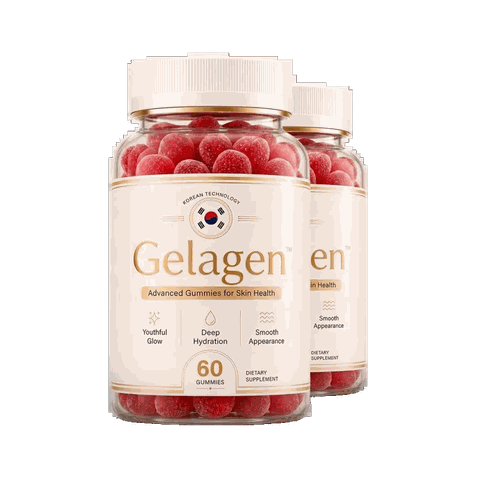
The row, as printed
The Gelagen Supplement Facts panel lists vitamin E once, on its own line, with its own amount — no blend, no combined weight shared with another nutrient. The row reads: Vitamin E, as d-alpha tocopheryl acetate, 7.4 mg, 49% of the Daily Value. That is the whole of what the label says about it. The form named is d-alpha tocopheryl acetate, the natural-source ester form of alpha-tocopherol, which is the only form of vitamin E that NIH's Office of Dietary Supplements recognizes as meeting a human vitamin E requirement.
Forty-nine percent is the number most people stop at. It sounds moderate, comfortably under the full Daily Value, the kind of figure that invites a shrug and a turn of the page. This post does the arithmetic the shrug skips: where does 7.4 mg sit against the three other numbers NIH publishes for this nutrient, and what has to happen before a vitamin E dose becomes something a clinician would actually want to know about.
Three reference numbers, not one
A single percent-Daily-Value figure flattens three separate reference points into one. For vitamin E, NIH's Office of Dietary Supplements publishes at least three numbers that matter for different reasons, and conflating them is how a label gets read as either more alarming or more reassuring than the evidence supports.
The Daily Value and the RDA. The FDA Daily Value used on Supplement Facts panels for vitamin E is 15 mg a day for adults, which is also the Recommended Dietary Allowance NIH publishes for adult men and women. The two figures agree here, which is not true of every nutrient on this panel — vitamin B6, elsewhere on this label, uses a Daily Value that sits above the current RDA for most adults. For vitamin E, 15 mg is both numbers at once, so the 49% figure on the bottle is also roughly 49% of the RDA.
The Tolerable Upper Intake Level. NIH's Office of Dietary Supplements sets the adult UL for vitamin E at 1,000 mg a day of any form of supplemental alpha-tocopherol — the figure is sometimes written as 1,500 IU, which is the international-unit equivalent of the same 1,000 mg ceiling. Below that level, the fact sheet states, vitamin E has been found to be safe without adverse events in the general population. This is the number that defines ordinary supplemental overuse, not the number that defines a drug interaction.
The interaction caution. Separately from the general upper limit, NIH's health-professional fact sheet carries a specific caution for people taking anticoagulant or antiplatelet medication — drugs such as warfarin, clopidogrel or routine aspirin therapy. Vitamin E affects platelet aggregation and the arachidonic acid pathway in a way that can compound the bleeding risk those medications already carry. This caution is discussed in connection with the kind of doses used in vitamin E supplementation studies, which run from several hundred milligrams a day upward — a tier far below the 1,000 mg general UL but far above what is printed on this bottle.
The size of the gap, worked out
Put 7.4 mg next to each of those three numbers and the gap is not a feeling, it is a division problem.
Against the 15 mg Daily Value and RDA: 7.4 ÷ 15 = 49.3%, which rounds to the 49% printed on the label. One gap closes almost exactly in half.
Against the 1,000 mg upper limit: 7.4 ÷ 1,000 = 0.74%. Less than one percent of the ceiling NIH sets for general adult safety. A person would need to multiply this panel's vitamin E content by roughly 135 times before reaching that ceiling from this gummy alone.
Against the several-hundred-milligram range where the interaction caution is discussed — take 400 mg as a representative point inside that range, a dose commonly used in vitamin E supplementation research: 7.4 ÷ 400 = 1.85%. Even against the low end of the range clinicians are actually watching for an anticoagulant interaction, this panel's dose is under two percent of it.
None of that arithmetic is a judgment about whether 7.4 mg is the right amount of vitamin E for any particular person to take. It is a description of where one printed number sits inside a published scale, using only figures that NIH itself has published and that this panel itself discloses.
Why the interaction caution is a separate number from the upper limit
It is tempting to read "below the upper limit" as "cleared of every caution," and that is exactly the shortcut this post is trying not to take. The 1,000 mg UL and the anticoagulant interaction caution answer two different questions. The UL asks: at what intake does vitamin E itself start to cause adverse effects in a general population with no other risk factors. The interaction caution asks a narrower question: for a person already taking a medication that affects clotting, at what point does added vitamin E start to compound that medication's own effect on bleeding risk.
A dose can sit comfortably under the first number and still be worth mentioning to a clinician because of the second, if someone is on one of those medications. That is precisely why NIH's fact sheet lists the interaction as its own numbered caution rather than folding it into the UL discussion. Reading only the percent-Daily-Value column collapses that distinction; reading the interactions section of the primary source restores it.
This panel's 7.4 mg does not reach either threshold. But the reason that is worth saying plainly, with the numbers attached, is that a 49% Daily Value figure on its own gives no sense of distance from either ceiling. Forty-nine percent of 15 mg looks moderate. Forty-nine percent of 1,000 mg would not be. The percent-Daily-Value column is doing arithmetic against the smallest of the three reference numbers, which is exactly what it is designed to do and exactly why it should not be the only number anyone reads.
What a favorable gap does and does not mean
A wide numerical gap between a printed dose and a caution threshold is informative, not dispositive. It does not substitute for telling a clinician or pharmacist about every supplement taken alongside a prescribed anticoagulant or antiplatelet drug, including a vitamin E dose this small. Interaction risk in an individual depends on more than one nutrient's dose in isolation — it depends on the specific medication, the dose of that medication, kidney and liver function, and what else is being taken at the same time, vitamin E included.
What the gap does mean is that the conversation about this particular panel's vitamin E content can start from an actual number rather than from the word "vitamin," which carries no dose information at all. A person on warfarin reading "contains vitamin E" has no way to judge anything. A person reading "7.4 mg, about half the Daily Value, under one percent of the upper limit, and under two percent of the dose range where an interaction caution is typically discussed" has something concrete to bring to that conversation, and something concrete for a clinician to evaluate quickly.
The caution line that runs across this entire site stands here too: talk to a clinician before starting if you take medicines, are pregnant or nursing, or have a medical condition. Nothing in this post's arithmetic is a substitute for that sentence. It is an attempt to make the sentence specific rather than generic.
Milligrams and IU: why the UL is written both ways
NIH's Office of Dietary Supplements publishes the vitamin E upper limit as both 1,000 mg and 1,500 IU, and the Daily Value's 15 mg figure is sometimes seen elsewhere written as 22 IU. The two units describe the same underlying amount through different accounting systems, and the reason both appear on a nutrient like vitamin E, but not on most of the other rows on this panel, is that vitamin E's biological activity historically varied enough by chemical form — natural RRR-alpha-tocopherol versus synthetic all-rac-alpha-tocopherol — that an international-unit system was built specifically to make different forms comparable by activity rather than by raw weight.
For this panel's purposes, the form named is d-alpha tocopheryl acetate, the natural-source ester, where 1 mg converts to roughly 1.49 IU. That conversion does not change any of the percentages already calculated in this post — 7.4 mg is 7.4 mg regardless of which unit it is expressed in, and NIH's own RDA, UL and interaction figures are published as mg-equivalents specifically so that a reader does not have to do a unit conversion to compare them against a milligram figure on a label. The IU figure is mentioned here only because it appears in NIH's own fact sheet language and because older vitamin E products on the market sometimes still print IU instead of, or alongside, milligrams, which is a separate labeling detail worth knowing if comparing this bottle with a different brand's.
Common questions about this row
Does 49% of the Daily Value mean this is roughly half of a safe daily dose? No, and this is the exact confusion this post is trying to head off. Forty-nine percent is this panel's share of the 15 mg Daily Value and RDA, which is the amount that meets an ordinary adult's nutritional requirement, not the amount considered a safety ceiling. The actual safety ceiling, the 1,000 mg UL, is a different and much larger number; 7.4 mg is under one percent of that figure, not roughly half of it.
What if someone also takes a separate vitamin E supplement, or a multivitamin that includes it? This panel's 7.4 mg would then be one of two or more sources adding together. Even stacked with a typical separate multivitamin's vitamin E content, most combinations would still land well short of the several-hundred-milligram range this post discusses, but anyone layering multiple supplements should add up the vitamin E milligrams across all of them, not assume each bottle's percentage is independent of the others.
Does the natural d-alpha form carry a different interaction risk than the synthetic dl-alpha form? NIH's fact sheet discusses the anticoagulant and antiplatelet interaction as a property of vitamin E's effect on platelet aggregation generally, tied to the dose of alpha-tocopherol rather than to a documented difference in interaction risk between the natural and synthetic forms specifically. This post does not assert a form-based difference in interaction risk because the primary source does not draw that distinction in its interactions section.
Is 7.4 mg close to what a typical diet already provides? This post does not estimate average dietary vitamin E intake, because that number depends entirely on what an individual eats and this label does not disclose anything about diet. What can be said from the label alone is that 7.4 mg is the supplemental contribution from this product specifically, to be added to whatever a reader's diet already supplies, with the 15 mg RDA as the combined target for both sources together.
All four numbers in one table
| Reference point | Amount | This panel's 7.4 mg, as a share |
|---|---|---|
| FDA Daily Value / NIH RDA | 15 mg | 49.3% |
| NIH Tolerable Upper Intake Level (UL) | 1,000 mg (1,500 IU) | 0.74% |
| Representative interaction-caution dose | 400 mg | 1.85% |
| This panel, as printed | 7.4 mg | — |
The 400 mg interaction-caution figure is a representative point inside the several-hundred-milligram range NIH's fact sheet associates with vitamin E supplementation studies and the anticoagulant/antiplatelet caution, not a single bright line published by NIH. The 15 mg and 1,000 mg figures are published directly in the fact sheet's RDA and UL tables.
Try Gelagen with 60 days to change your mind
Two bottles is $79 each and lasts exactly 60 days, which is the only pack that matches the guarantee window. Three brings it to $69 a bottle with free US shipping.
Add to cart, $158 for 2 bottles
Checkout happens on the seller’s secure page. After you order, the desk listed in the footer handles tracking and refunds.
References
- NIH Office of Dietary Supplements. Vitamin E, Health Professional Fact Sheet (RDA, Tolerable Upper Intake Level, and interactions with anticoagulant/antiplatelet medication). https://ods.od.nih.gov/factsheets/VitaminE-HealthProfessional/
- U.S. Food and Drug Administration, reference table: Daily Value on the Nutrition and Supplement Facts Labels. https://www.fda.gov/food/nutrition-facts-label/daily-value-nutrition-and-supplement-facts-labels
Every source above was opened and read on October 1, 2026. None of them tested Gelagen itself. They describe the named nutrients, which is a different thing from testing this finished formula.
Keep reading
Next on this site
The Gelagen label, transcribed
The printed panel line by line, with every amount, every computed percentage and a list of what the label does not say.
How to read a supplement panel in four minutes
Serving size, the amount column, percent Daily Value, Other Ingredients, the FDA asterisk and the lot codes.
Two milligrams of B6 against a body that doesn't store it
The panel's B6 row against the current RDA, as an absolute margin rather than a percentage.